Every project has to begin somewhere.
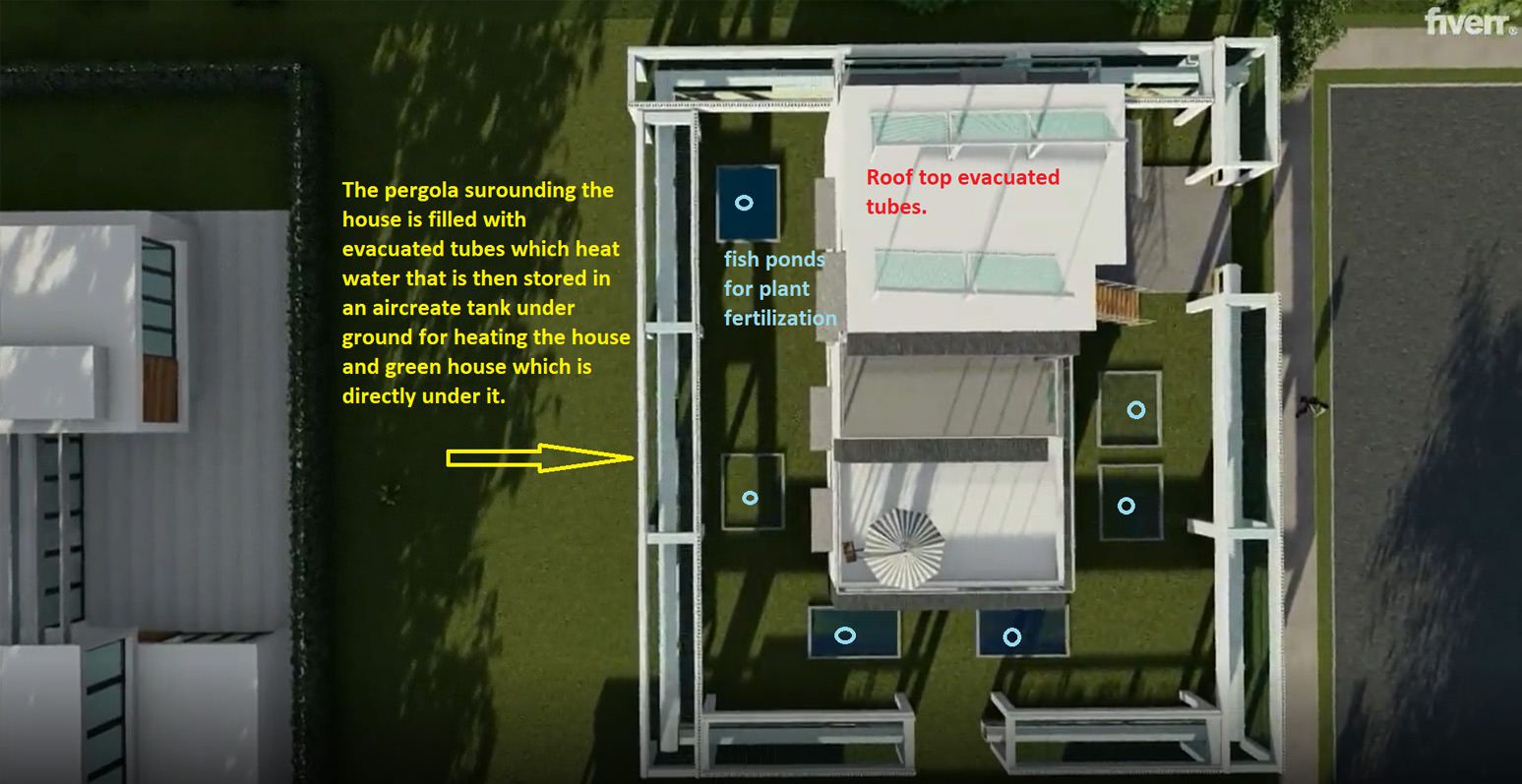
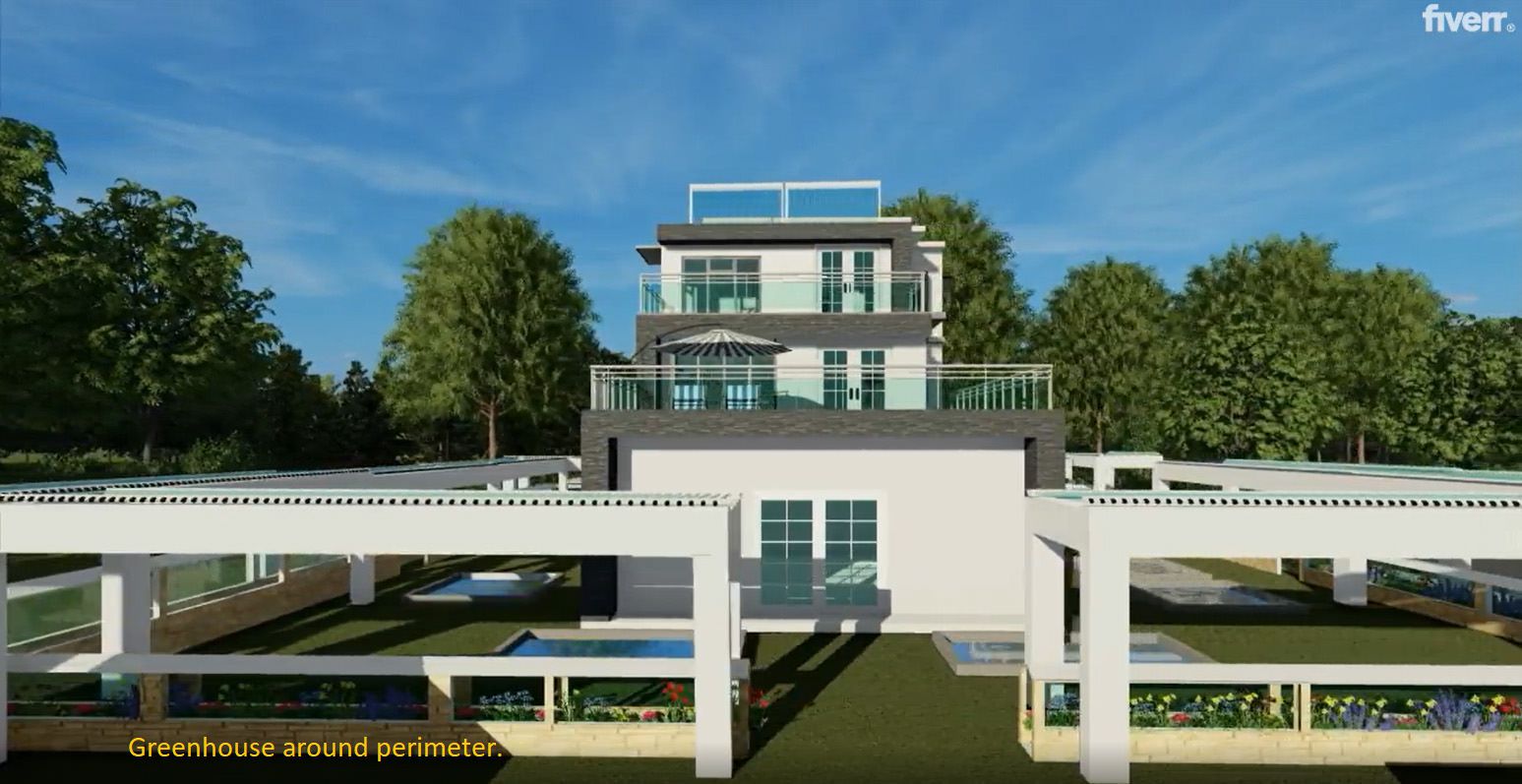
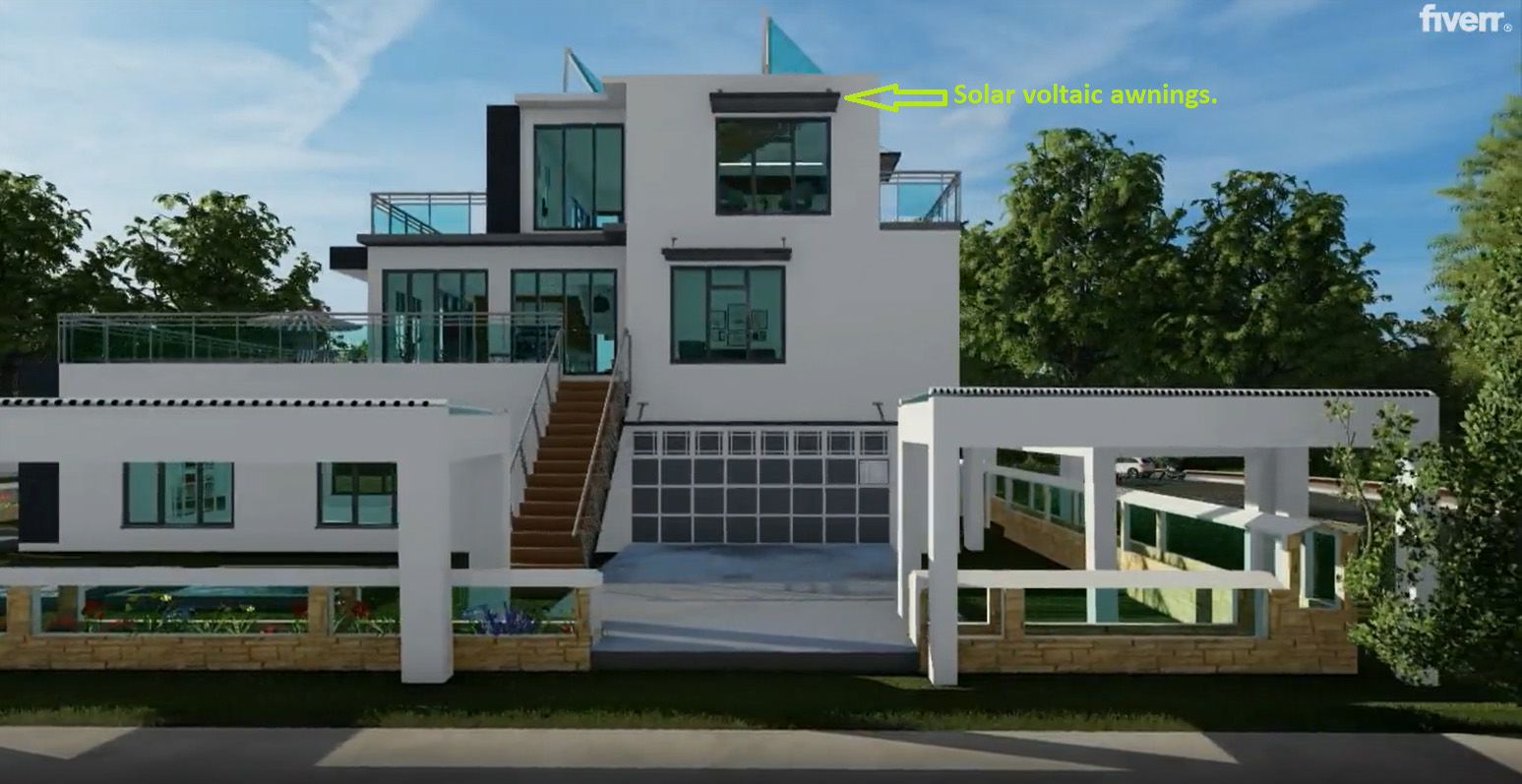
Concept One represents our first attempt to take the ideas behind The Poquonnock Bridge Project and turn them into a physical home.
The goal was not simply to design another house. We wanted to begin exploring what a home might look like if energy production, heating and cooling, food production, architecture, and everyday living were considered from the beginning.
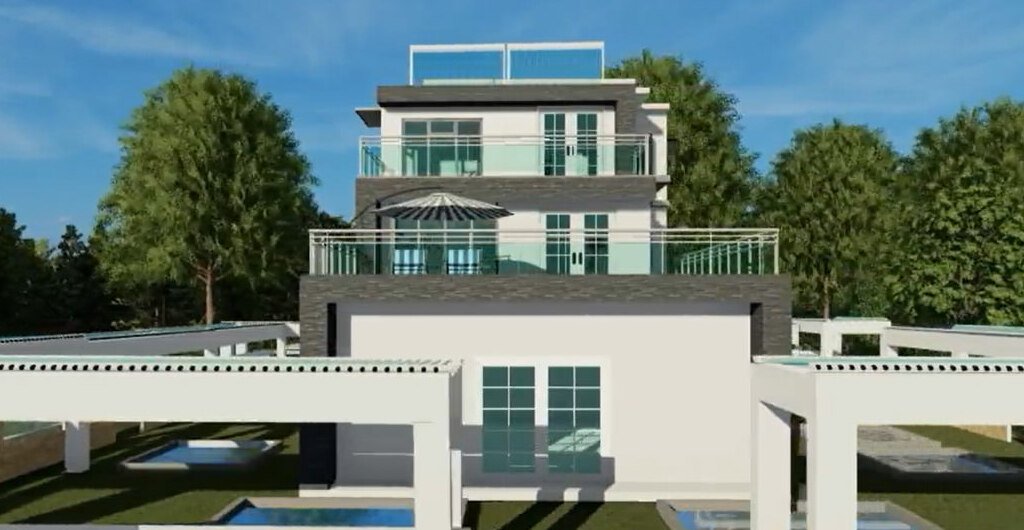
The video and images on this page show an early vision of that idea.
A House Designed as a System
Most homes are designed first as buildings, with technologies such as solar panels, heating equipment, gardens, and other systems added later.
The Poquonnock Bridge Project is exploring a different approach.
Instead of treating those systems as separate additions, we want to investigate how the entire house can be designed to work together.
The shape and orientation of the building can affect how much sunlight reaches the roof.
The roof can become a place to generate energy.
Windows can be positioned to make better use of natural light and seasonal solar heat.
The building envelope can reduce the amount of energy needed for heating and cooling.
Outdoor and enclosed growing areas can become part of the home's food-production system.
Concept One was our first effort to bring those ideas together in one architectural design.
Using the Site
The location of a house matters just as much as the house itself.
Sunlight changes throughout the day and throughout the year. Trees, neighboring buildings, roof angles, and the orientation of the property all influence how solar energy can be used.
That means the design cannot simply be placed on a property without considering the environment around it.
Concept One begins exploring how the house can relate to the site while leaving opportunities for solar collection, outdoor living areas, landscaping, and future food-production systems.
Making More of the Home
We want the home to do more than provide shelter.
A conventional house consumes electricity, heating fuel, water, and food brought in from somewhere else.
The long-term vision of The Poquonnock Bridge Project is to see how much of that dependence can be reduced by designing more productive homes.
Solar photovoltaic panels could generate electricity.
Solar thermal collectors could produce useful heat.
Geothermal or heat-pump technology could help heat and cool the building efficiently.
Vertical growing and aquaponics could allow vegetables, herbs, and potentially fish to be produced within a relatively small area.
High-performance building materials and insulation could reduce the amount of energy the house needs in the first place.
Concept One begins to provide the physical framework into which these technologies could eventually be integrated.
Architecture Still Matters
Efficiency alone is not enough.
People have to live in these houses.
They should be comfortable, attractive, practical, and enjoyable places to spend time.
One of the goals of the project is to avoid the idea that sustainable housing must look industrial or sacrifice comfort in order to conserve resources.
Technology, aesthetics, and function should support one another.
The renderings shown here represent an early attempt to find that balance.
A Concept, Not a Final Answer
Concept One should not be viewed as a finished engineering plan.
It is a starting point.
As we learn more about energy, building materials, thermal systems, aquaponics, structural requirements, construction costs, and the realities of the site, parts of the design will change.
Some ideas will work exactly as expected.
Others will need to be modified or replaced.
That process is part of the project.
The purpose of Concept One is to give us something tangible to examine, question, improve, and build upon.
Building a New World From the Old
Much of the technology needed to create more efficient and productive homes already exists.
The challenge is bringing those technologies together in a way that is practical, affordable, attractive, and useful to the people living there.
Concept One is the first architectural step in that process.
It is where the ideas begin to become a building.
And from this first concept, the next version can become better.